How Hobbies Quietly Transform Your Health (And Why You Need One Now)
You don’t need a gym membership or a strict diet to boost your health—sometimes, the real fix is something you already enjoy. I’m talking about hobbies. From gardening to painting, playing music to woodworking, what we do for fun isn’t just distraction—it’s medicine. Science shows regular engagement in meaningful pastimes lowers stress, sharpens focus, and even strengthens immunity. This is health optimization, not through force, but through joy. Let’s explore how your free-time passions quietly rebuild your well-being.
The Hidden Health Crisis of an Unfilled Life
In today’s fast-paced world, many women in their 30s, 40s, and 50s find themselves caught in a cycle of constant doing—managing households, supporting families, meeting work demands—without time to simply be. The absence of personal joy is not a minor oversight; it is a growing public health concern. Research from the American Psychological Association consistently shows that prolonged stress without emotional outlets increases the risk of anxiety, depression, and cardiovascular disease. A 2022 study published in the journal Preventive Medicine found that adults who reported no regular leisure activities were 34% more likely to develop symptoms of clinical depression over a five-year period than those who engaged in hobbies even once a week.
The human mind was not designed for endless productivity. It thrives on rhythm—effort followed by restoration, responsibility balanced with release. When that balance is lost, the body pays the price. Chronic stress elevates cortisol levels, which over time can impair sleep, weaken immune function, and contribute to weight gain, particularly around the abdomen. The World Health Organization has recognized chronic stress as a global health epidemic, yet one of the most accessible solutions—engaging in simple, self-directed activities—is often overlooked. Many women dismiss hobbies as frivolous, a luxury reserved for retirement or child-free years. But science tells a different story: leisure is not indulgence. It is a biological necessity.
Consider the typical day of a middle-aged woman juggling career and family. Mornings begin with preparing meals, coordinating schedules, and answering work emails. Evenings involve homework help, household chores, and meal cleanup. In between, personal needs are deferred—sometimes for years. This pattern, repeated daily, creates what psychologists call “emotional exhaustion,” a precursor to burnout. Without moments of personal fulfillment, identity begins to blur. Women may start to feel defined solely by their roles—mother, employee, caregiver—rather than as individuals with unique interests and passions. This loss of self can quietly erode mental resilience, making it harder to cope with life’s inevitable challenges.
The good news is that reintegration of joy does not require dramatic changes. It begins with recognizing that time spent on oneself is not selfish—it is sustainable. Public health data increasingly supports the idea that regular participation in enjoyable activities acts as a protective factor against mental and physical decline. A longitudinal study from the University of Cambridge followed over 8,000 adults for a decade and found that those who engaged in creative or physical hobbies had a 27% lower risk of developing hypertension and a 30% reduced incidence of insomnia. These benefits were independent of income, education, or existing health conditions. The takeaway is clear: making space for play is not a distraction from health—it is a core component of it.
What Exactly Counts as a "Health-Boosting" Hobby?
Not all leisure activities offer the same health benefits. Watching television, while relaxing for some, often lacks the active engagement needed to trigger meaningful psychological shifts. Similarly, aimless scrolling through social media may provide temporary distraction but rarely fosters a sense of accomplishment or deep satisfaction. A true health-boosting hobby is characterized by three key elements: it is self-chosen, intrinsically motivating, and requires focused attention. These activities engage the mind in a way that passive consumption cannot, creating what psychologists call “flow”—a state of complete immersion where time seems to disappear.
Flow is not just a pleasant experience; it is a neurologically restorative one. Activities that induce flow—such as knitting, baking from scratch, or tending to a garden—activate the brain’s reward system, reinforcing feelings of competence and control. This is especially important for women who may feel a lack of autonomy in other areas of life. Choosing to paint a watercolor, learn a new recipe, or build a birdhouse is an act of self-determination. It says, “This time is mine, and I am using it to create something meaningful.” That sense of agency has measurable effects on emotional well-being.
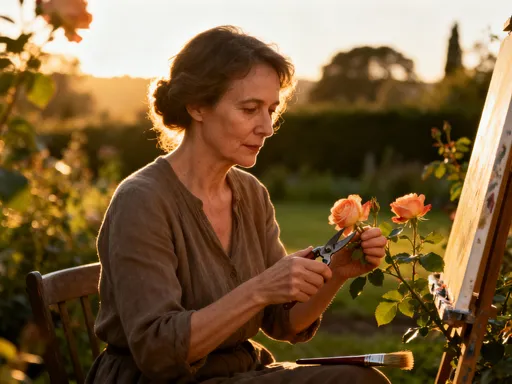
Health-promoting hobbies often fall into categories that involve creation, movement, or connection with nature. Crafting, for example, combines fine motor skills with creative expression, engaging both hands and mind. Cooking, particularly when done mindfully, turns meal preparation into a sensory-rich ritual that enhances appreciation for food and nourishment. Outdoor activities like gardening or walking in nature provide dual benefits: physical movement and exposure to natural light, both of which support circadian rhythm regulation and mood stability.
It’s also important to distinguish between hobbies and obligations. A pastime becomes less beneficial when it is driven by performance pressure or external validation. The goal is not to become an expert baker or a published photographer, but to engage in an activity that brings quiet satisfaction. For some, this might mean journaling each morning with a cup of tea. For others, it could be playing piano for 15 minutes before bed. The form matters less than the feeling it creates—a gentle return to oneself, free from judgment or expectation.
The Science Behind Joy: How Hobbies Rewire Your Brain
The brain responds to enjoyable activities in profound and measurable ways. When a woman picks up a paintbrush, kneads dough, or strums a guitar, her brain chemistry begins to shift almost immediately. Dopamine, the neurotransmitter associated with motivation and pleasure, is released in anticipation and during engagement. Serotonin, which regulates mood and contributes to feelings of well-being, also increases. At the same time, levels of cortisol, the primary stress hormone, begin to decline. These changes are not just subjective—they can be observed through neuroimaging and biochemical testing.
Functional MRI studies have shown that creative hobbies activate the prefrontal cortex, the region responsible for decision-making, emotional regulation, and problem-solving. This activation strengthens neural pathways over time, improving cognitive flexibility and resilience. For women navigating the complexities of midlife—hormonal changes, shifting family dynamics, career transitions—this mental clarity is invaluable. A 2021 study from the University of California, Berkeley, found that adults who engaged in regular creative activities demonstrated better memory recall and faster processing speed than those who did not, even after controlling for education and baseline cognitive function.
Repetitive, rhythmic activities like knitting, quilting, or weeding a garden produce effects similar to meditation. These motions engage the parasympathetic nervous system, which governs the body’s “rest and digest” response. As breathing slows and muscles relax, the mind follows. This state of calm focus is not passive; it is restorative. Researchers at Harvard Medical School have found that just 20 minutes of such activity can reduce anxiety markers by up to 25%, with effects lasting hours afterward. For women who struggle with racing thoughts at night or feel overwhelmed during the day, these hobbies serve as natural anchors.
Moreover, the brain thrives on novelty and learning. Taking up a new hobby—whether it’s learning a language, mastering a musical instrument, or trying watercolor painting—stimulates neuroplasticity, the brain’s ability to form new connections. This is particularly important as we age, when cognitive decline becomes a concern. A study published in Neurology followed older adults over seven years and found that those who regularly engaged in mentally stimulating hobbies had a 32% lower risk of developing mild cognitive impairment. The message is clear: joy is not just a feeling—it is a form of brain training.
From Stress Relief to Immune Support: The Body Benefits
The mind-body connection is well established in medical science, and hobbies serve as a powerful bridge between the two. When psychological stress decreases, the body responds in kind. Chronic stress weakens the immune system by suppressing the activity of white blood cells and increasing inflammation. Over time, this makes the body more vulnerable to infections, slows healing, and contributes to the development of chronic conditions such as arthritis and heart disease. Engaging in enjoyable, low-stress activities helps reverse this process.
Longitudinal research supports this link. A 12-year study conducted by the National Institute on Aging tracked over 6,000 adults and found that those who regularly participated in leisure activities—such as gardening, dancing, or playing cards—had a 23% lower rate of hospitalization for infectious diseases. Researchers attribute this not only to reduced stress but also to improved sleep and better self-care habits that often accompany regular hobby engagement. Women who make time for themselves are more likely to prioritize sleep, hydration, and nutritious eating, creating a positive feedback loop of health.
Physical benefits extend beyond immunity. Hobbies that involve movement—such as dancing, hiking, or even active gardening—contribute to cardiovascular health, muscle strength, and balance. A 2020 study in the Journal of Aging and Physical Activity showed that women who gardened at least three times a week had significantly better hand strength and joint flexibility than those who did not, reducing their risk of falls and osteoarthritis. Dancing, particularly styles that involve coordination and rhythm, has been shown to improve balance and spatial awareness, key factors in maintaining independence with age.
Even sedentary hobbies offer physiological advantages. Reading, for instance, has been linked to lower blood pressure and reduced heart rate. A study from the University of Sussex found that just six minutes of reading can reduce stress levels by up to 68%, outperforming other relaxation methods like listening to music or drinking tea. Similarly, journaling has been shown to reduce symptoms of asthma and rheumatoid arthritis, likely due to its role in emotional processing and stress reduction. These findings underscore a crucial point: the body heals not only through medicine but through moments of peace, purpose, and pleasure.
Finding Your Fit: Matching Hobbies to Your Lifestyle
The most effective hobby is one that fits seamlessly into daily life. It should not feel like another item on an already overflowing to-do list. The key is alignment—choosing an activity that resonates with personality, energy levels, and practical constraints. For introverted women, solitary pursuits like knitting, reading, or sketching may provide the ideal balance of engagement and solitude. For those who thrive on social connection, group activities such as choir, book clubs, or community gardening offer both creative expression and companionship.
Time and space are common concerns, but they need not be barriers. A hobby does not require hours of uninterrupted time or a dedicated studio. It can be as simple as journaling for ten minutes each morning, arranging flowers from the backyard, or trying a new recipe once a week. The goal is consistency, not intensity. Women who are new to hobbies should start small, treating the first few attempts as experiments rather than commitments. This reduces pressure and increases the likelihood of long-term engagement.
Budget is another consideration, but many fulfilling hobbies are low-cost or free. Public libraries offer access to books, music, and even online courses. Parks provide space for walking, birdwatching, or photography. Household items can be repurposed for crafting—old jars become vases, fabric scraps turn into quilts. The internet offers countless tutorials for learning skills at no cost, from baking to basic carpentry. The emphasis should be on accessibility, not perfection.
Personality also plays a role. A woman who enjoys structure may appreciate activities with clear steps, such as baking or model-building. One who values spontaneity might prefer free-form painting or improvisational music. The important thing is to honor individual preferences rather than conform to trends. A hobby should feel like a return to self, not a performance for others. When chosen with intention, it becomes a sustainable source of renewal rather than another source of stress.
Overcoming the "I Don’t Have Time" Myth
“I don’t have time” is the most common reason women give for not pursuing hobbies. Yet time is not the real issue—prioritization is. Most women can find 15 to 20 minutes in a day if the activity is truly valued. The problem lies in how we perceive leisure. In a culture that equates busyness with worth, taking time for oneself can feel indulgent, even guilty. But reframing hobbies as essential self-care—not luxury, but necessity—changes everything.
Research shows that even brief, regular engagement yields significant benefits. A study from the University of Pennsylvania found that adults who spent just 10 minutes a day on a creative task reported improved mood and increased feelings of competence after only two weeks. These micro-moments of joy accumulate, building resilience over time. The key is integration: attaching a hobby to an existing habit. For example, listening to a language-learning app during a morning commute, sketching while waiting for children’s activities to end, or practicing mindfulness while folding laundry.
Another strategy is to reclaim time spent on passive activities. Replacing 20 minutes of evening screen time with journaling, reading, or gentle stretching can transform downtime into restoration. The shift is not about adding more to the day, but redistributing it in ways that honor personal well-being. Women who make this shift often report feeling more energized, not less, because they are no longer draining themselves emotionally.
Family support can also make a difference. Communicating the importance of hobby time to loved ones helps create boundaries. Children learn by example—when they see a parent prioritizing self-care, they internalize the message that well-being matters. Simple statements like “This is my time to recharge” normalize the practice without guilt. Over time, these small changes reshape daily rhythms, making space for joy not as an exception, but as a habit.
Building a Sustainable Habit: When Fun Meets Routine
The greatest threat to a hobby is not lack of time, but loss of joy. When an activity begins to feel like an obligation, motivation fades. Sustainability comes not from discipline, but from delight. The goal is not to achieve mastery, but to maintain connection—with the activity, with oneself, with the present moment. This requires intentional protection of the hobby’s intrinsic value.
One way to preserve joy is to release performance expectations. A knitted scarf does not need to be perfect; a garden does not need to win awards. The value lies in the process—the feel of yarn between fingers, the smell of soil, the quiet focus of the moment. Celebrating small wins—finishing a page of writing, trying a new chord, noticing a new bird in the yard—reinforces positive associations and encourages continued engagement.
Flexibility is also essential. Life changes—children grow, careers shift, energy levels fluctuate. A hobby that once brought joy may no longer fit. That’s okay. The freedom to pause, adapt, or switch activities is part of self-respect. A woman who once loved painting may find that journaling better suits her current needs. What matters is the intention behind the time, not the form it takes.
Over time, a consistent hobby becomes more than a pastime—it becomes a form of daily self-respect. It is a quiet promise to honor one’s own well-being, not through grand gestures, but through small, sustained acts of care. And in that consistency, real transformation occurs. Stress diminishes. Focus sharpens. Joy returns. Health, in its fullest sense, is rebuilt—not through force, but through the gentle, persistent power of doing what you love.