Taste of the Arctic: How Rovaniemi’s Local Flavors Stole My Heart
Ever wondered what it feels like to eat like a local in the Arctic Circle? In Rovaniemi, Finland, I didn’t just taste food—I experienced culture, tradition, and warmth in every bite. From smoky reindeer dishes to foraged forest berries, the cuisine here tells a story of survival, seasonality, and soul. This is more than a meal; it’s a journey into the heart of Finnish Lapland. Nestled just north of the Arctic Circle, Rovaniemi is a city where winter reigns for much of the year, and life moves in rhythm with the seasons. Here, food is not an afterthought—it is central to identity, shaped by long winters, deep forests, and a resilient people who have learned to thrive in one of Europe’s harshest climates. To understand Rovaniemi is to taste it, one carefully preserved, lovingly prepared dish at a time.
Arrival in Rovaniemi: First Impressions of a Winter Wonderland
The first thing you notice when stepping off the plane in Rovaniemi is the air—crisp, clean, and so cold it feels like it’s been filtered through miles of untouched forest. Snow blankets the landscape in thick, undisturbed layers, muffling sound and casting the world in a soft, white hush. Streetlamps glow with a golden hue, their light diffused by the low-hanging winter sun that barely clears the horizon. The city, rebuilt after wartime destruction with a functional Nordic aesthetic, feels both modern and deeply rooted in its northern identity. Wooden cabins dot the outskirts, smoke curling gently from chimneys, carrying the faint scent of birch and pine.
As daylight fades into a prolonged twilight, the atmosphere shifts. There’s a quietude here, not of emptiness, but of presence—an awareness of nature’s dominance. In this environment, food takes on new meaning. It is not merely fuel, but a source of comfort, a celebration of what the land provides, and a way of maintaining connection across long, dark months. Restaurants and cafés glow warmly, inviting travelers and locals alike to warm their hands around mugs of coffee or rich reindeer stew. The menu is not a list of options; it is a reflection of survival, adaptation, and deep respect for the seasons.
For visitors, embracing local cuisine is the most authentic way to connect with the spirit of the region. Unlike tourist destinations where food is adapted for foreign palates, Rovaniemi offers dishes that have sustained families for generations. The ingredients are few but meaningful—reindeer, fish, root vegetables, wild berries, and preserved goods that carry the essence of the Arctic. To eat here is to participate in a tradition that values simplicity, sustainability, and seasonality above all. This is not fast food; it is slow nourishment, designed to sustain both body and soul.
The Soul of Sámi Cuisine: A Taste of Indigenous Heritage
At the heart of Rovaniemi’s culinary identity lies the influence of the Sámi people, the Indigenous inhabitants of northern Finland, Sweden, Norway, and parts of Russia. Their food traditions, shaped over centuries of living in harmony with the Arctic environment, form the foundation of Lapland’s cuisine. The Sámi diet has always been dictated by necessity—what could be hunted, fished, gathered, or preserved through the long winter. This deep connection to the land is evident in every dish that carries their legacy.
Reindeer, perhaps the most iconic element of Sámi cuisine, is more than a food source—it is a cultural cornerstone. Traditionally, reindeer herding was not only an economic activity but a way of life, passed down through generations. The meat is lean, rich in iron and protein, and uniquely suited to the cold climate. It is prepared in ways that honor its value: smoked for longevity, dried into thin strips known as bidos, or slow-cooked into stews that simmer for hours. Every part of the animal is used, reflecting a philosophy of respect and minimal waste.
Other ingredients central to Sámi cooking include cloudberries, wild herbs like angelica and cloudberry leaf, and freshwater fish such as whitefish and perch. These are often foraged from the forests and lakes surrounding Rovaniemi, harvested at precise times of year when their flavor and nutritional value peak. Fermentation and drying are traditional preservation methods that remain in use today, not out of nostalgia, but because they work. These techniques enhance flavor, extend shelf life, and allow communities to rely on summer’s abundance during winter’s scarcity.
It is important to approach Sámi cuisine with respect, avoiding romanticized or exoticized portrayals. This is not ‘primitive’ food, but highly adapted, intelligent cooking born of deep ecological knowledge. Many restaurants in Rovaniemi now collaborate with Sámi chefs and cooperatives to ensure authenticity and cultural accuracy. By choosing to eat these dishes, travelers support Indigenous food sovereignty and help preserve traditions that are still very much alive.
Reindeer on the Plate: Why It’s a Must-Try (And Not What You Expect)
For many visitors, the idea of eating reindeer is both intriguing and slightly intimidating. Popular culture often associates reindeer with Christmas and fantasy, not dinner plates. But in Lapland, reindeer meat is a dietary staple, enjoyed year-round and especially cherished during festive occasions. Far from being a novelty, it is a delicious, nutritious, and sustainable protein source that deserves a place on every traveler’s menu.
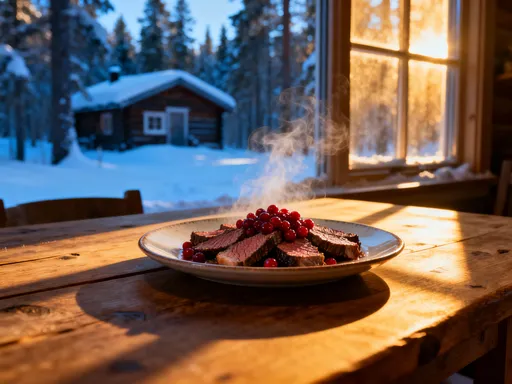
The flavor of reindeer is distinct—richer and deeper than beef, with a subtle gaminess that is never overpowering. When cooked properly, the meat is tender, almost buttery, with a deep red color that speaks to its high iron content. One of the most common preparations is pan-seared reindeer steak, served with a lingonberry sauce that balances the richness with a tart, fruity note. It is often accompanied by mashed potatoes or creamy rutabaga purée, creating a comforting, hearty meal perfect for cold evenings.
During my stay, I tried reindeer at a small family-run restaurant in the city center. The dish arrived simply plated, without fanfare—seared slices fanned over a bed of potato mash, a glossy red sauce drizzled on top, and a sprinkle of fresh herbs. The first bite was revelatory: the meat was tender, deeply savory, and paired exquisitely with the bright acidity of the lingonberries. There was no sense of novelty or shock—just honest, well-prepared food made with care.
It’s worth noting that reindeer in Finland is ethically sourced. Most comes from semi-domesticated herds managed by Sámi herders under strict regulations. Hunting is seasonal and closely monitored to ensure sustainability. The animals live freely in the wild for much of the year, feeding on lichen and natural vegetation, which contributes to the meat’s unique flavor. Unlike industrial farming, this system prioritizes animal welfare and environmental balance.
For those hesitant to try reindeer, it may help to think of it not as an exotic experience, but as a regional specialty—no different than sampling lamb in New Zealand or bison in Canada. It is food rooted in place, shaped by climate and culture. To eat reindeer in Rovaniemi is to honor the land and the people who have lived sustainably upon it for generations.
Foraged Flavors: The Wild Pantry of Finnish Forests
If reindeer represents the protein of the Arctic, then wild berries and herbs are its soul. Finnish cuisine places a strong emphasis on foraging, a practice deeply embedded in the national identity. The concept of *jokamiehenoikeus*, or ‘everyman’s right,’ allows anyone to roam freely in nature, picking berries, mushrooms, and herbs as long as they do not damage the environment. This tradition fosters a profound connection between people and the land, turning the forest into a communal pantry.
In late summer, the marshes and hills around Rovaniemi burst with cloudberries—golden-orange berries that grow in peat bogs and are prized for their delicate, tart flavor. Often called ‘Arctic gold,’ they are used in desserts, jams, and even liqueurs. Because they are difficult to cultivate, wild harvesting remains the primary source, making them a seasonal delicacy. I joined a guided foraging tour one sunny afternoon, led by a local woman who knew exactly where to find the best patches. As we waded through damp moss and low shrubs, she explained how her grandmother taught her to identify edible plants, a knowledge passed down orally through generations.
Autumn brings an abundance of wild mushrooms—chanterelles, boletes, and morels—each with its own flavor profile and culinary use. These are often sautéed with butter and cream or dried for use during winter months. Spring, though brief, offers angelica shoots, which can be eaten raw, pickled, or used in soups. Even pine and birch sap are collected, turned into refreshing drinks or syrups.
Foraged ingredients appear throughout Lapland’s cuisine. A simple dessert might feature cloudberry parfait layered with whipped cream and crushed meringue. A savory sauce could include wild herbs to add earthy depth. Some restaurants even offer tasting menus that highlight seasonal foraged items, allowing diners to experience the changing year on a plate. These ingredients are not gimmicks; they are essential components of a cuisine that celebrates what the land naturally provides.
For travelers, foraging tours offer more than just food—they provide a meditative, immersive experience. Walking through the quiet forest, learning to identify edible plants, and understanding their role in local life fosters a deeper appreciation for the region’s culinary traditions. It is slow travel at its most intimate, connecting you not just to the landscape, but to the people who live within it.
Cozy Cafés and Local Eateries: Where to Eat Like a Resident
To truly taste Rovaniemi, one must venture beyond tourist-focused restaurants and into the cozy cafés and markets where locals gather. These spaces are the heartbeat of daily life, where strong coffee is poured generously, pastries are still warm from the oven, and conversation flows in soft Finnish tones. The atmosphere is unpretentious, welcoming, and deeply comforting—exactly what you need after a day in the cold.
One of the most beloved treats in these cafés is *karjalanpiirakka*, or Karelian pasty. This traditional Finnish pastry consists of a thin rye crust filled with rice porridge or mashed potatoes, then brushed with egg wash to create a glossy finish. It is typically served with a side of *munavoi*, a mixture of chopped hard-boiled eggs and butter. Simple, humble, and deeply satisfying, it is the kind of food that feels like home, even if you’ve never been here before.
Another staple is Finnish coffee—dark, strong, and almost always available. Finns are among the highest coffee consumers in the world, and in Rovaniemi, it is more than a drink; it is a ritual. Paired with a cinnamon bun or a slice of *sämpöläinen* (a local sweet bread), it becomes a moment of pause, a way to warm up and reconnect. Many cafés bake their own goods daily, using local flour, butter, and berries, ensuring freshness and supporting regional producers.
For a broader selection of local foods, the Rovaniemi Market Hall is a must-visit. Inside, wooden stalls display fresh fish, smoked meats, handmade cheeses, and jars of preserves. Vendors greet customers by name, offering samples of reindeer sausage or freshly picked cloudberries. The air is rich with the scent of baking bread and curing fish. This is not a performance for tourists—it is a working market, a place where families shop and friendships are maintained.
Practical tips for dining like a local include checking opening hours, as many smaller establishments close early or on weekends. While most places accept cards, it’s wise to carry some cash, especially in rural areas. Menus may be in Finnish, but many include English translations, and staff are generally patient with questions. Don’t hesitate to ask for recommendations—locals take pride in their cuisine and are often happy to guide visitors toward authentic experiences.
Cooking in the Wild: A Sauna and Meal Under the Northern Lights
One of the most unforgettable culinary experiences in Rovaniemi is preparing and sharing a meal in the wilderness. I had the opportunity to visit a traditional Finnish sauna hut located just outside the city, accessible only by snowmobile or ski. The structure was simple—wooden walls, a stone fireplace, and a sauna stove heated with birch logs. As the temperature rose inside, we prepared food outdoors, using the open fire to grill trout caught from a nearby frozen lake.
Potatoes were wrapped in foil and buried in the hot ashes, emerging an hour later with crisp skins and fluffy insides. The fish, seasoned only with salt and dill, was cooked on a wooden plank over the flames, absorbing the smoky aroma of the fire. We ate at a rough-hewn table, passing dishes family-style, sipping hot berry soup from mugs. The conversation was quiet, punctuated by laughter and the crackling of the fire. Outside, the northern lights began to dance—ribbons of green and violet shimmering across the sky.
In that moment, the connection between food, nature, and ritual became undeniable. There was no menu, no waiter, no distractions. Just the act of preparing, sharing, and savoring a meal in one of the most remote and beautiful places on Earth. The simplicity was profound. Every bite felt earned, every flavor intensified by the cold air and the warmth of human company.
This kind of experience is not unique to Rovaniemi, but it is perfectly suited to it. The Finnish concept of *kalsarikännit*—relaxing at home in your underwear, undisturbed by the outside world—extends to the wilderness. Here, it becomes *luontoloma*, or nature holiday—a chance to unplug, reconnect, and live simply. Food is not separate from this; it is central to it. Whether baking flatbread on a stick or melting cheese over a campfire, cooking in the wild is both practical and ceremonial.
Beyond the Plate: How Food Shapes Rovaniemi’s Identity
Rovaniemi’s cuisine is more than a collection of recipes—it is a reflection of resilience, adaptation, and cultural continuity. In a region where the growing season is short, temperatures plummet, and darkness lasts for weeks, food has always been a matter of survival. Yet, from these constraints, a rich and meaningful culinary tradition has emerged—one that values ingenuity, sustainability, and deep respect for nature.
The reliance on preserved foods—smoked fish, dried reindeer, fermented vegetables—speaks to a history of foresight and preparation. Nothing is wasted. Every ingredient is used to its fullest potential. This mindset is now being embraced in modern sustainability efforts, with restaurants prioritizing local sourcing, zero-waste practices, and seasonal menus. Chefs in Rovaniemi are not just cooking; they are preserving a way of life.
Food also serves as a bridge between generations. Elders teach children how to pick berries, fillet fish, and make traditional dishes. These skills are not just practical—they are acts of cultural transmission. In a world where fast food and globalized tastes dominate, Rovaniemi offers an alternative: a return to slow, intentional eating that honors place and history.
For travelers, embracing this food culture means more than trying new dishes—it means adopting a different pace, a different way of being. It means listening to stories, learning names of plants, and understanding that every meal has a backstory. It means eating with gratitude, not just for the food, but for the people and the land that made it possible.
Conclusion: A Flavorful Farewell to Finnish Lapland
As my time in Rovaniemi came to an end, I realized that my journey had been transformed by what I had eaten. It wasn’t just the taste of reindeer or the sweetness of cloudberries—it was the understanding that food here is lived, not just consumed. Each meal was a lesson in resilience, a celebration of seasonality, and an invitation to slow down. Rovaniemi taught me that the most meaningful travel experiences are often found not in monuments or landmarks, but in the quiet moments around a table, a fire, or a market stall.
To future visitors, I offer this: come to Rovaniemi not just to see the Arctic, but to taste it. Let the flavors guide you—through forests, into kitchens, and toward deeper connections. Eat the local dishes, join a foraging tour, share a meal in a sauna hut. Listen to the stories behind the food. Let your palate become your passport. In a world that often feels rushed and disconnected, Rovaniemi reminds us that nourishment is more than sustenance. It is memory, identity, and belonging—one delicious bite at a time.