You Won’t Believe What Lies Beneath Samarkand’s Golden Streets
Walking through Samarkand, I never expected the ground beneath me to hold centuries of secrets. This isn’t just a city of dazzling domes and ancient legends—its terrain tells a deeper story. From sun-baked desert edges to hidden oasis trails, the land shapes every part of life here. The way people build, farm, and travel is all tied to the earth’s rhythm. Let me take you where few tourists go—into the heart of Central Asia’s most mesmerizing landscape.
First Glimpse: Where Desert Meets Civilization
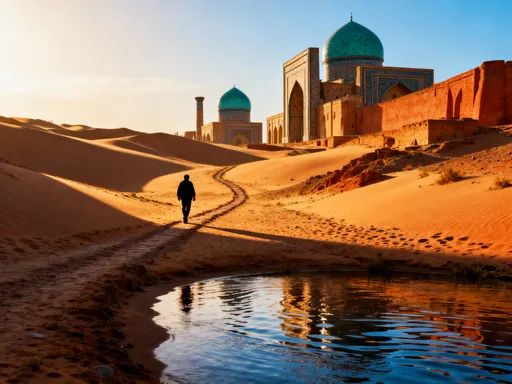
As travelers approach Samarkand from the east or north, the landscape unfolds in layers of ochre and gold. The vast Central Asian steppe stretches endlessly, dotted with hardy shrubs and dry grasses that sway in the wind. This arid expanse, part of the larger Turan Plain, seems inhospitable at first glance. Yet, as the road draws closer to the city, a transformation begins. The earth softens in color and texture, giving way to patches of green—first sparse, then increasingly dense. It is here that the Zeravshan River, a lifeline carved through millennia, reveals its quiet power.
The river originates in the high mountains of Tajikistan, fed by snowmelt and spring rains. Over centuries, it has deposited nutrient-rich sediments across its floodplain, creating pockets of fertile soil in an otherwise dry region. This natural irrigation has allowed human settlement to flourish where few would expect. The contrast between the surrounding desert and the city’s lush gardens is not merely visual—it is a testament to the ingenuity of those who learned to harness the river’s seasonal flow. Ancient communities built their lives around its rhythms, anticipating periods of abundance and preparing for drought.
Today, visitors arriving by train or car experience this shift almost dramatically. One moment, the horizon is barren; the next, orchards and vineyards appear like mirages made real. This transition is not accidental but the result of sustained human adaptation. The city does not dominate the land—it negotiates with it. Every tree, every field, every mud-brick wall owes its existence to the delicate balance between scarcity and sustenance. Samarkand stands not in defiance of the desert, but in dialogue with it.
The City Built on Sand and Stone
Samarkand’s grandeur rests on surprisingly fragile foundations. Much of the city is built atop alluvial deposits—layers of sand, silt, and gravel left behind by the Zeravshan River over thousands of years. These soils are soft and prone to shifting, especially during periods of heavy rain or seismic activity. Yet, despite this instability, the city has endured for over 2,700 years. Its resilience is not due to modern engineering alone, but to centuries of architectural wisdom passed down through generations.
Traditional builders in Samarkand developed techniques specifically suited to the region’s geology. Foundations were often deepened and reinforced with compacted stone and reed layers to prevent sinking. Walls were constructed from sun-dried adobe bricks, made from local clay mixed with straw. These materials, while humble, possess remarkable thermal properties—keeping interiors cool in summer and warm in winter. More importantly, their flexibility allows structures to absorb minor tremors without collapsing. This is crucial in a region that lies within a moderate seismic zone, where small earthquakes have occurred throughout history.
No place illustrates this resilience better than Registan Square, the heart of Samarkand’s historical identity. Once a center of scholarship and commerce, the square is surrounded by three towering madrassahs adorned with intricate tilework and soaring iwans. Despite their height and weight, these structures have withstood centuries of environmental stress. Engineers and historians believe that the use of flexible mortar, layered brickwork, and carefully calculated weight distribution played key roles in their survival. The fact that these buildings remain standing—some leaning slightly, yet still majestic—is a tribute to the harmony between human design and natural conditions.
Oasis Life: How Water Defines the Terrain
Beneath Samarkand’s surface runs a hidden network that has sustained life for over a thousand years—the karez system. Also known as qanats in other parts of the world, these underground canals tap into groundwater tables in the foothills and channel water by gravity to fields and settlements below. Unlike open reservoirs or wells, karezes minimize evaporation, making them ideal for arid climates. They are not merely engineering feats but lifelines that have shaped the very pattern of human habitation in the region.
The construction of a karez required extraordinary precision and communal effort. Vertical shafts were dug at regular intervals along a gently sloping tunnel, allowing workers to remove debris and maintain airflow during excavation. Once completed, the system could transport water over several kilometers without pumps or external energy. In Samarkand’s outskirts, remnants of these ancient channels still feed small farms and family gardens. Here, apricot trees bloom in spring, pomegranate bushes bear fruit in late summer, and melons ripen under the intense sun—all because water moves silently beneath the soil.
These green belts, narrow ribbons of fertility following the course of underground and surface streams, dictate where villages can thrive. Homes are clustered near reliable water sources, often arranged in concentric patterns around shared wells or irrigation ditches. Agriculture is intensely localized, with crops chosen not only for taste but for drought tolerance. Farmers grow millet, barley, and certain varieties of wheat that require less moisture. Even today, many rural families rely on this age-old system, though modern wells and electric pumps have begun to supplement—and sometimes disrupt—the balance.
The karez is more than infrastructure; it represents a philosophy of coexistence. Water is not conquered but coaxed from the earth with patience and respect. Each drop is valued, each channel maintained through collective responsibility. In a world increasingly strained by water scarcity, this ancient model offers quiet wisdom.
High Ground and Hidden Pathways
Rising gently from the valley floor, the hills surrounding Samarkand offer more than scenic views—they tell a story of movement, defense, and survival. These elevated routes, some barely visible today, were once critical arteries for trade and communication. Long before modern roads, merchants and messengers navigated these ridges to avoid the heat and hazards of the lowlands. The higher elevation provided cooler temperatures, clearer sightlines, and protection from flash floods that occasionally swept through the river basin.
One such trail winds westward from the city toward the village of Afrosiab, perched on an ancient mound believed to be the site of Samarkand’s earliest settlement. Walking this path today, one can see how the terrain opens up into panoramic vistas—the golden plains stretching east, the distant silhouette of the Gissar Mountains to the south. These vantage points were not just beautiful but strategic. Watchtowers once stood at key junctions, allowing guards to spot approaching caravans or potential threats long before they reached the city gates.
Elevation also influences microclimates within the region. At higher altitudes, temperatures are slightly cooler, and breezes carry moisture-laden air from the mountains. This creates pockets where certain plants thrive—wild almonds, pistachio shrubs, and aromatic herbs like thyme and oregano. Local shepherds still use these slopes for seasonal grazing, moving their flocks upward in spring and descending in autumn. The rhythm of transhumance, though less common now, remains a living tradition in some communities.
For modern visitors, these trails offer a chance to experience Samarkand beyond the monuments. Hiking through the hills, one encounters traces of the past—not just in ruins, but in the way the land has been shaped by footsteps, hooves, and time. The terrain itself becomes a map of human resilience, written in slopes and shadows.
Traversing the Land: From Caravans to Modern Transit
Samarkand’s place on the Silk Road was never accidental. Its location at the crossroads of east-west trade routes was determined by geography as much as by politics. The Zeravshan Valley provided a natural corridor through an otherwise challenging landscape—avoiding the rugged mountains to the south and the vast deserts to the north. Caravans laden with silk, spices, and precious stones followed this path for centuries, stopping in Samarkand to rest, trade, and resupply.
These ancient travelers faced formidable challenges. The terrain was uneven, with sections prone to erosion and seasonal flooding. Sandstorms could appear without warning, obscuring trails and endangering both people and animals. Camels, well-adapted to arid conditions, were the preferred mode of transport—not only for their endurance but for their ability to carry heavy loads across soft ground. Rest stops, known as caravanserais, were spaced a day’s journey apart, offering shelter, water, and protection from bandits.
Today, the same natural corridor is followed by highways and rail lines connecting Uzbekistan to neighboring countries. The Tashkent–Samarkand high-speed rail, completed in 2011, cuts travel time significantly, yet its route closely mirrors the old Silk Road path. Engineers still contend with many of the same issues—soil instability, flash floods, and extreme temperatures. In some areas, protective walls and drainage systems have been built to shield tracks from shifting sands.
Modern transportation has brought greater accessibility, but it has also introduced new pressures. Increased traffic contributes to land degradation, particularly near urban edges where natural vegetation is cleared for development. Dust pollution from unpaved roads affects air quality, while overuse of groundwater for construction and agriculture threatens the delicate hydrological balance. The land that once welcomed caravans with quiet generosity now bears the weight of progress—and demands careful stewardship.
Living With the Earth: Adaptations Through Time
Life in Samarkand has always been a negotiation with nature. The climate is continental—scorching summers, freezing winters, and little rainfall in between. To survive, people have developed agricultural and architectural practices finely tuned to these extremes. Crops such as cotton, melons, and drought-resistant grains are rotated to preserve soil health. Farmers plant in raised beds to improve drainage and use mulch to retain moisture. In rural areas, animal husbandry remains an essential part of the economy, with sheep and goats grazing on sparse pastures that would be unusable for cultivation.
Architecture reflects this same sensitivity. Traditional homes feature thick adobe walls that insulate against heat, small windows to reduce solar gain, and flat roofs used for sleeping in summer or storing goods. Courtyards are central to domestic life, providing shaded spaces for family gatherings and often containing a well or small garden. Even in modern buildings, these elements persist—not as nostalgia, but as practical responses to environmental reality.
Cultural traditions are also rooted in the land. Seasonal festivals mark the agricultural calendar—Nowruz in spring celebrates renewal and planting, while harvest festivals in autumn give thanks for abundance. These events are not merely ceremonial; they reinforce community bonds and transmit knowledge across generations. Elders teach children which plants bloom when, how to read weather signs in the sky, and where to find clean water in dry times. This intergenerational wisdom is a form of resilience, passed down not in textbooks but through stories, songs, and shared labor.
In recent decades, some of these practices have faded, especially among younger urban residents. Yet there is a growing movement to revive traditional knowledge, particularly in response to climate change. Schools and cultural centers now offer programs on sustainable farming, water conservation, and natural building techniques. The past is not being idealized—it is being reinterpreted as a source of solutions.
Why This Terrain Still Matters Today
The terrain of Samarkand is not a relic of the past but a living force shaping the present. Its geography continues to influence tourism, urban planning, and environmental policy. Visitors come to see the Registan, but what they often remember most is the feeling of walking through shaded gardens, hearing the whisper of water in ancient channels, or standing on a hilltop where the wind carries the scent of wild herbs. These experiences are not incidental—they are direct results of the land’s character.
Preservation efforts now extend beyond monuments to include landscapes. UNESCO, which designated Samarkand a World Heritage Site in 2001, emphasizes the importance of protecting both cultural and natural heritage. This includes safeguarding the Zeravshan River from over-extraction, restoring degraded farmland, and managing tourism sustainably. Local authorities have introduced regulations limiting construction in ecologically sensitive zones and promoting green infrastructure in new developments.
Yet challenges remain. Climate models predict increasing temperatures and decreasing rainfall in Central Asia over the coming decades. Water scarcity could threaten both agriculture and urban supply. Land degradation, exacerbated by overgrazing and poor irrigation practices, risks turning fertile zones back into desert. These are not distant threats but present realities that require immediate action.
Sustainable travel offers one path forward. Tourists can support eco-friendly guesthouses, choose guided walks over motorized tours, and visit community-run farms that practice organic methods. By doing so, they contribute to local economies while minimizing environmental impact. More importantly, they gain a deeper understanding of the place—not as a postcard image, but as a living, breathing ecosystem shaped by time and human care.
Samarkand’s true magic isn’t just in its glittering tiles or storied past—it’s in the soil, slopes, and streams that made it all possible. Understanding the terrain transforms a simple visit into a deeper journey through time and nature. When you walk these paths, you're not just seeing history—you're feeling it underfoot.