You Won’t Believe These Hidden Gems in the Black Forest
Nestled in southwest Germany, the Black Forest is more than just cuckoo clocks and cherry cake—it’s a treasure trove of architectural wonders hiding in plain sight. From centuries-old half-timbered houses to majestic monasteries tucked in misty valleys, these landmark buildings tell stories of faith, craftsmanship, and timeless charm. I was blown away by how much history lives in these wooden beams and stone walls. Every carved gable, every weathered doorframe, speaks of generations who built not just for shelter, but for legacy. If you're craving beauty with soul, this is your next must-visit.
Discovering the Soul of the Black Forest Through Its Buildings
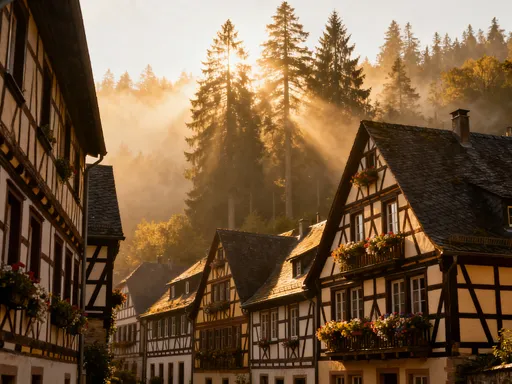
The architecture of the Black Forest is not merely a backdrop—it is the heartbeat of the region’s identity. Walking through its villages feels like stepping into a living museum, where every structure has been shaped by both nature and necessity. The dense evergreen canopy, heavy snowfalls, and rugged terrain have long dictated design, giving rise to steeply pitched roofs that shed snow, deep overhangs that protect against rain, and thick timber walls that insulate against alpine winters. These are not accidental features, but the result of centuries of adaptation, passed down through generations of skilled carpenters and builders.
What makes these buildings truly special is how they blend form and function with deep cultural meaning. The half-timbered houses, with their exposed wooden frames filled with wattle and daub, are not just picturesque—they reflect a tradition of communal craftsmanship. Entire villages once came together to raise a home, using local materials and time-honored techniques. The patterns in the woodwork—crosses, stars, even family initials—often carry symbolic significance, offering protection or marking ownership. These homes were built to last, and many have stood for over 300 years, silently witnessing the passage of time.
Equally important are the church spires that pierce the forest canopy, visible from great distances. These structures served not only as places of worship but as beacons of community and continuity. In a landscape where isolation was once a real threat, the church was a gathering point, a source of comfort, and a marker of identity. Today, they remain anchors of cultural memory, drawing visitors not just for their beauty, but for the sense of peace they offer. The architecture of the Black Forest, then, is more than aesthetic—it is a testament to resilience, faith, and the enduring power of place.
Freiburg Minster: Gothic Majesty in the Heart of Nature
Rising above the rooftops of Freiburg im Breisgau, the Freiburg Minster stands as one of the most exquisite examples of Gothic architecture in Germany. Unlike many cathedrals that feel imposing or austere, the Minster has a delicate, almost ethereal quality, as if it were carved from lace rather than stone. Its west façade is a masterpiece of verticality and detail, with three grand portals adorned with intricate sculptures of saints, prophets, and biblical scenes. Above them, a vast rose window glows with warm light, while slender columns and pinnacles draw the eye ever upward, toward the heavens.
The true marvel, however, is the cathedral’s freestanding spire. At 116 meters tall, it dominates the skyline, yet its openwork stonework gives it an astonishing lightness. Constructed entirely from local sandstone, the spire was completed in the 13th century and has survived wars, fires, and time itself. Visitors who climb the 365 steps to the top are rewarded with a panoramic view of the city, the Rhine Valley, and the forested hills beyond. On a clear day, the vista stretches for miles, offering a breathtaking sense of connection between human achievement and natural beauty.
But the Minster is not just a monument to architectural brilliance—it is a living part of the community. Daily services, concerts, and public gatherings continue to fill its nave, reminding visitors that this is not a relic, but a place of ongoing spiritual and civic life. Locals often gather in the square below, drawn by the cathedral’s quiet dignity. For many, it represents continuity in a changing world, a symbol of hope and stability. Whether admired from afar or experienced up close, the Freiburg Minster offers a profound encounter with history, art, and the human spirit.
St. Blaise Abbey: Where Silence Speaks Volumes
Deep in the Ravenna Gorge, surrounded by towering pines and the soft murmur of a mountain stream, lies St. Blaise Abbey—a place where time seems to slow and the noise of the modern world fades. Originally founded in the 10th century as a Benedictine monastery, the current Baroque church was rebuilt in the 18th century and stands as one of the most impressive religious structures in the region. Its grand façade, crowned with twin domes, rises dramatically from the forest floor, a testament to the monks’ devotion and artistic ambition.
Step inside, and the contrast is immediate. The exterior is bold and monumental, but the interior is a symphony of light, color, and quiet grandeur. Gilded altars, frescoed ceilings, and sweeping arches create a sense of divine harmony. The high altar, dedicated to St. Blaise, is a masterpiece of craftsmanship, with statues that seem to move in the flickering candlelight. The acoustics are extraordinary—whispers echo softly, and the occasional choral rehearsal fills the space with an almost otherworldly resonance. It is easy to imagine the monks who once prayed here, their chants blending with the wind through the trees.
Equally moving are the cloisters, where silence is not emptiness, but presence. Walking along the arched walkways, one feels the weight of centuries of contemplation. The garden at the center, though simple, is meticulously maintained, a reflection of the monastic ideal of order and harmony. Though the abbey is no longer an active monastery, it remains a place of pilgrimage and reflection. Visitors often sit on the stone benches, simply breathing, listening, being. In a world that rarely pauses, St. Blaise Abbey offers a rare gift: the chance to be still, to listen to what silence has to say.
The Charm of Triberg’s Traditional Villages
Triberg is perhaps best known for its waterfalls and cuckoo clocks, but its true magic lies in the surrounding villages, where traditional Black Forest architecture has been lovingly preserved. Places like Altwerk, Neukirch, and Unterstatt are not tourist recreations—they are lived-in communities where old ways endure. Here, houses with steeply pitched roofs and wide eaves line narrow lanes, their facades painted in soft earth tones or left to age naturally. Flower boxes overflow with geraniums and petunias, and wooden balconies are carved with intricate patterns, each one unique.
What makes these homes so captivating is their authenticity. They were not built for show, but for life in the highlands—functional, durable, and deeply connected to the land. The roofs, often covered in dark shingles, are designed to withstand heavy snow, while the overhanging eaves protect the walls from rain. Many homes include a *Küchle*, a small kitchen annex, and a *Stöck*, an open-air storage space beneath the roof, used for drying herbs and meat. These features, once essential to rural survival, now serve as quiet reminders of a self-sufficient way of life.
Walking through these villages, one gains a deeper appreciation for the rhythm of Black Forest living. Farmers still tend their fields, children play near wooden fences, and elders sit outside their homes, greeting passersby. There are no crowds, no souvenir stalls—just the quiet hum of daily life. For travelers seeking connection over convenience, these villages offer a rare opportunity to slow down and witness a culture that values tradition, craftsmanship, and community. A simple cup of coffee on a village bench becomes a moment of reflection, a chance to see beauty not in grandeur, but in the ordinary.
Hofgut Sternen: A Living Museum of Timber Architecture
Just outside the village of Oberharmersbach, Hofgut Sternen stands as a rare example of a fully preserved 17th-century Black Forest estate. What began as a nobleman’s hunting lodge and farm complex has been meticulously restored and transformed into a cultural destination that offers far more than just a place to stay. Every beam, every stone, every thatched roof tells a story of life in the forest centuries ago. The main building, with its massive timber frame and steep gables, is a textbook example of *Schwarzwaldhaus* architecture—designed for both warmth and durability in a harsh climate.
Inside, the experience is immersive. The wooden halls creak underfoot, not from neglect, but from age and use—a reminder that this is not a replica, but a lived-in space. The vaulted cellars, once used to store wine and preserved foods, now host exhibitions on traditional crafts and regional history. One room displays old tools—wood planes, hand-forged nails, weaving looms—each one a testament to the skill of Black Forest artisans. The kitchen, with its enormous hearth and copper pots, offers a glimpse into daily life when meals were cooked over open flames and food was sourced from the land.
What sets Hofgut Sternen apart is its commitment to authenticity. Guests can stay in restored guest rooms, dine on seasonal regional cuisine, and even participate in workshops on woodworking, bread baking, or herb drying. Children can explore the farmyard, where chickens, goats, and rabbits roam freely. It’s not just a place to visit—it’s a place to experience. By preserving not just the buildings, but the way of life they supported, Hofgut Sternen offers a rare form of cultural tourism that is both educational and deeply moving. It reminds us that heritage is not just about monuments, but about the stories, skills, and values they carry forward.
Practical Tips for Exploring Architectural Sites
Exploring the architectural treasures of the Black Forest is a rewarding experience, but planning ahead ensures a smooth and respectful journey. Public transportation is reliable, with regional trains and buses connecting major towns like Freiburg, Triberg, and Schiltach. However, many of the most beautiful villages and remote sites are best reached by car, allowing for greater flexibility and access to scenic forest roads. If driving, be mindful of narrow lanes and limited parking—arriving early in the day helps avoid congestion, especially in popular areas like Triberg or Freiburg.
The best times to visit are late spring through early autumn, when the weather is mild and the landscape is lush. Summer brings longer days and vibrant markets, while autumn paints the forest in golden hues, creating a stunning backdrop for photography. Winter, though colder, offers a magical atmosphere, with snow-covered roofs and smoke curling from chimneys—but some sites may have reduced hours or be closed. Checking official websites or tourist information centers before visiting is always recommended.
When visiting churches, monasteries, or private homes, it’s important to be respectful. Many of these buildings are still in use, either as places of worship or as private residences. Always observe posted signs, avoid loud conversations, and ask permission before photographing interiors or people. If attending a service or event, dress modestly and remain quiet. For outdoor sites, stick to marked paths and avoid touching historic woodwork or stonework, which can be fragile.
Combining architectural visits with other local experiences enriches the journey. A morning spent exploring Freiburg Minster can be followed by lunch at a market stall offering Black Forest ham and fresh bread. A hike through the woods near St. Blaise Abbey can lead to a quiet picnic by a stream. Shopping for handmade crafts—wood carvings, linen textiles, or honey—supports local artisans and brings a piece of the region home. These small moments, woven together, create a travel experience that is not just scenic, but meaningful.
Why These Landmarks Matter Beyond Their Beauty
The architectural gems of the Black Forest are more than just picturesque sights—they are vital links to a cultural heritage that is both unique and fragile. Each building, whether a grand cathedral or a humble farmhouse, represents a way of life shaped by centuries of adaptation, faith, and community. They are physical records of how people once lived, worked, and worshipped, offering lessons in sustainability, craftsmanship, and resilience. In an age of mass production and rapid change, these structures remind us of the value of slowness, care, and connection to place.
Preserving these landmarks is not just about protecting old buildings—it’s about safeguarding identity. The techniques used in timber framing, for example, are not merely historical curiosities; they are models of sustainable building, using renewable materials and passive design to create energy-efficient homes. Some modern architects are now studying these methods to inform eco-friendly construction. By maintaining these traditions, the Black Forest offers not just nostalgia, but innovation rooted in wisdom.
For travelers, engaging with these sites goes beyond taking photos or checking destinations off a list. It’s an invitation to look deeper, to ask questions, to listen to the stories embedded in wood and stone. It’s about recognizing that every carved beam, every weathered step, carries the weight of memory. When we visit with respect and curiosity, we become part of that story—not as outsiders, but as witnesses to a living culture.
The Black Forest does not shout for attention. Its beauty is quiet, its lessons subtle. But for those willing to slow down, to walk its lanes, to stand in silence beneath a centuries-old spire, it offers something rare: a sense of belonging, of continuity, of peace. These hidden gems are not just places to see—they are places to feel, to remember, and to carry forward. In a world that often feels disconnected, the Black Forest reminds us that some things—like beauty, tradition, and the human spirit—endure.